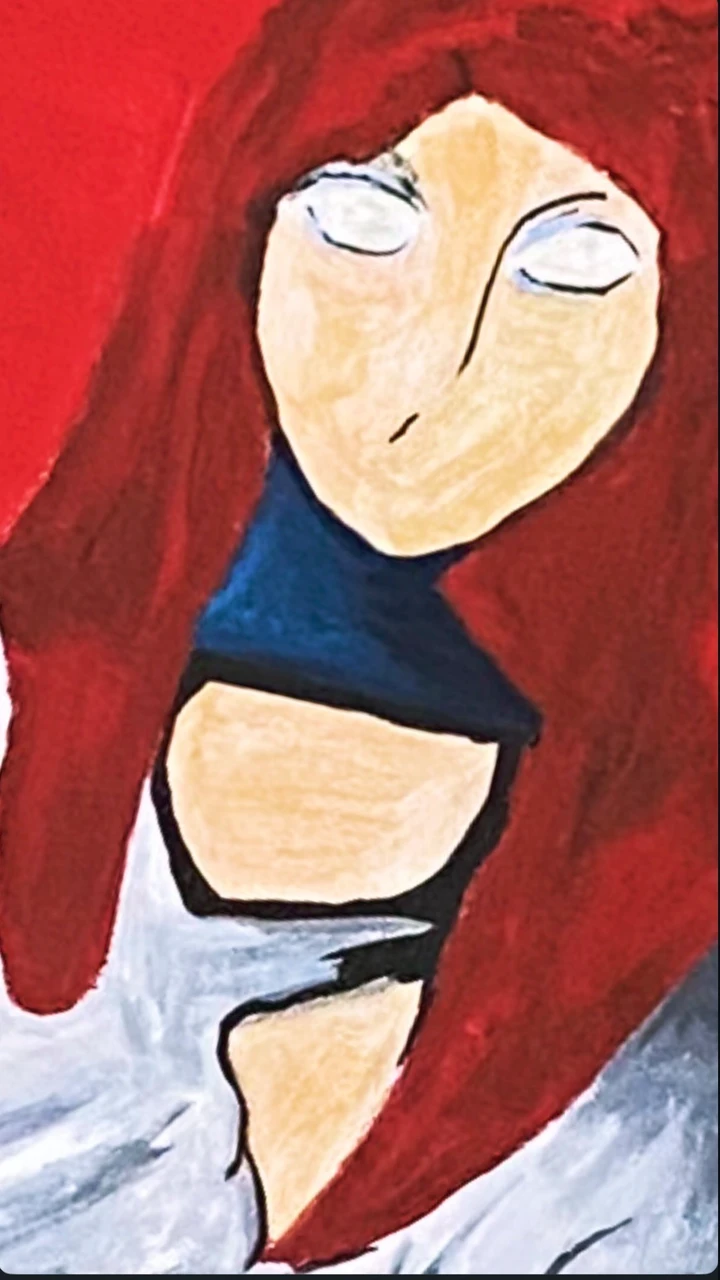
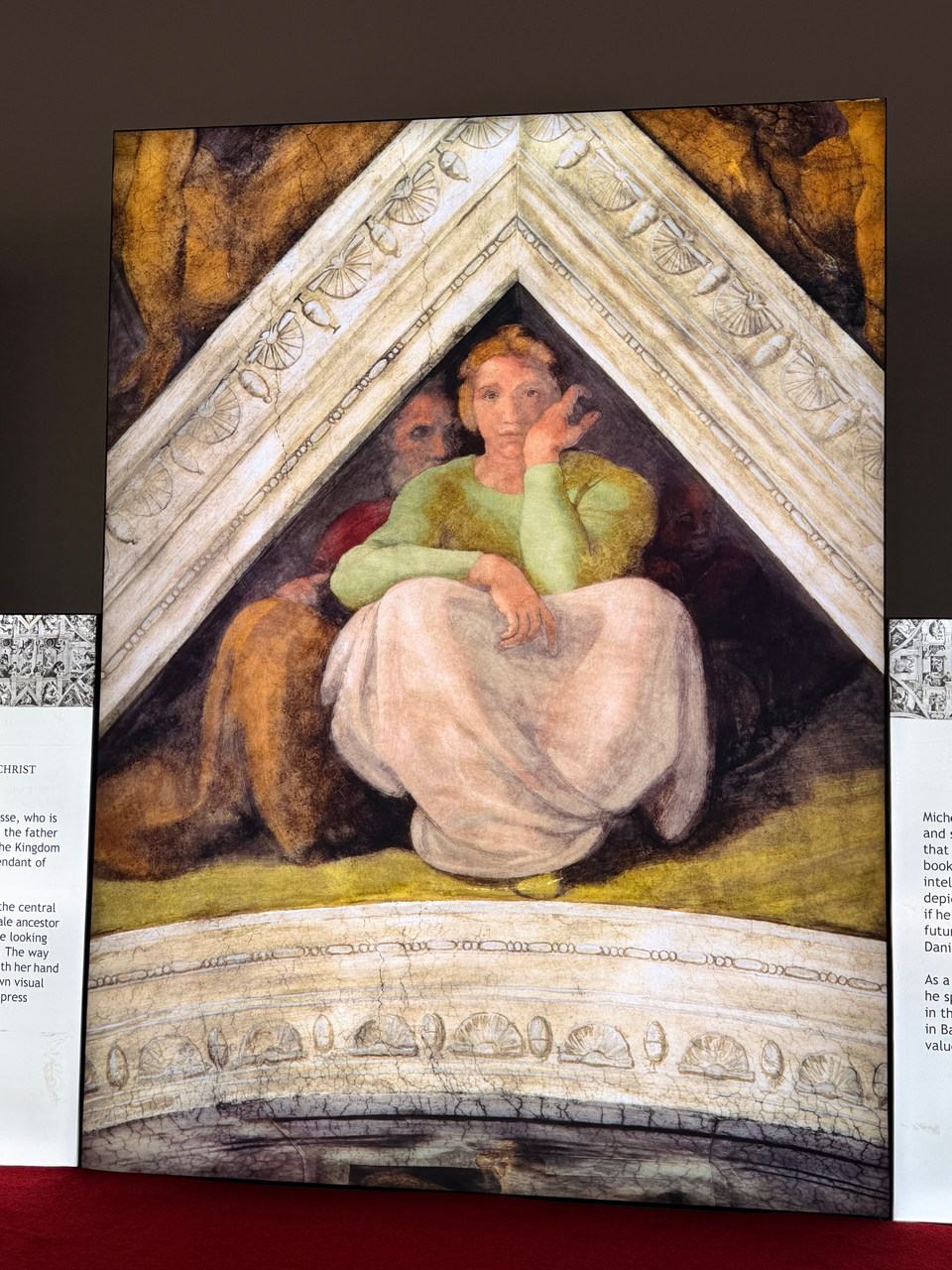
All tracks written, composed, performed, and produced by Susi de León Campo
Inside the record
Open a track to read its story.
01
Anoche
3:43+
About the track
Anoche is a reinterpretation of “Que Soñaba en el Piano” from the album SDLC_02. It combines different genres, styles, and harmonies, all moving toward one goal: making the song fun to listen to.
A vast, quiet room filled with soft light. A woman kneels in the center, facing the Tabernacle, while another version of herself speaks to her and tries to pull her away. She remains still and focused. The scene then shifts into ordinary daily life, where she sits at her piano as news, conversations, and human experiences continue to reach her. She takes everything in and tries to understand it, firmly repeating, “No, no,” because nothing will separate her from Him.
View Lyrics for Anoche
No, no vas a separarnos,
de Él no es la culpa de lo que somos.
No, no vas a separarnos,
de Él no es la culpa de lo que somos.
Anoche, que soñaba en el piano,
asimilaba tu respuesta.
Anoche, que soñaba en el piano,
asimilaba tu respuesta.
Que fue así, que fue verdad.
Que fue así, que era verdad.
Que fue así, que era verdad.
Que fue así, que era verdad.
No me preguntes que no vas a separarnos.
(x8)
No, no, no, no, no.
No, no, no, no, no.
Anoche, que soñaba en el piano,
asimilaba tu respuesta.
Anoche.
Anoche.
Anoche.
Anoche, que soñaba en el piano,
asimilaba tu respuesta.
Que fue así, que fue verdad.
Que fue así, que era verdad.
Que fue así, que era verdad.
Que fue así, que era verdad.
The Rebellion moves through two competing flows, with the piano and drums constantly colliding to create a restless, confrontational sound. It carries anger toward the injustices found in human relationships and everyday life. It is the feeling of being unable to leave while becoming increasingly frustrated with staying.
Cinematic / soundtrack, Ambient / atmospheric, Contemporary instrumental, Neoclassical / piano led
Instrumentation and sound
Piano, electronic drums
Scene or visual suggestion
Two opposing currents move through the same confined space, one fluid and deliberate, the other sharp and relentless. They collide again and again, but neither can escape or overpower the other. The space fills with tension as every impact reflects the frustration of being forced to remain inside a system
I attended Mass, where John 3:16 was part of the Gospel reading. I felt inspired to create a melody that could accompany the passage, giving the listener space to read, pray, and reflect.
This was an unexpected recording. I simply started playing, and the piece evolved while I was lucky enough to be recording. It became a beautiful transitional song filled with unexpected changes. It feels playful, constant, intriguing, and completely centered on the piano.
New Age / meditative, Cinematic / soundtrack, Ambient / atmospheric, Contemporary instrumental, Neoclassical / piano led
Instrumentation and sound
Piano
Scene or visual suggestion
A quiet space suspended in anticipation, filled with the feeling that something is about to happen. A steady pulse moves beneath the silence, creating tension that continues to build. Suddenly, the space opens into a rush of color, movement, and emotion, releasing everything that had been waiting underneath.
I created this song using a scale of Neapolitan Dorian (Spanish origin) to honor the stories of my grandfather and great grandfather. It reflects their struggles and the honorable choices they made, which helped make the life I live today possible.
At dawn, a shipwrecked man reaches the shore of an unfamiliar land. Exhausted and carrying almost nothing, he looks back at the ocean and understands that everything he once knew has been left behind. He gathers the courage to walk toward a new life. As the unfamiliar town begins to wake, he finds work and accepts every sacrifice placed before him. His labor allows his siblings to study and build futures of their own. While they open books and enter classrooms, he continues working quietly, finding dignity and purpose in giving them the opportunities he had to leave behind.
Additional credits
Special thanks to Juan Francisco Campo Gálvez and Antonio Campo Muñoz, whose honorable lives inspired the experience behind this track.
View Lyrics for Lo que vibra en la vida
Tú y tú y tú, henos aquí.
Como pega el viento,
pega duro,
casi nos quita la vida.
Enterrando nuestro pasado
en este lugar.
Este lugar que da vida.
Y estamos tú y tú y tú, henos aquí.
Lo que va del viento,
que vibra la vida. (x5)
Y estamos tú y tú y tú, henos aquí.
Por amor es que lo haré.
Por amor. (x )
Te doy mi vida.
Te doy mis sueños.
Te doy mi esperanza.
Para que sigas tu vida
y tú la aproveches.
Solo júrame, júrame, que lo harás.
Porque a mí me duele, a mí me duele
dejar todo lo que quería hacer.
Pero estamos tú y tú y tú, henos aquí.
5.16.20
Neapolitan Dorian
(Spanish origin)
This track explores a relationship of love and hate with something you feel compelled to do. You love the process, even though the task leaves scars. You know the struggle is necessary because it will help you grow, so you continue. In the end, you hate how much you love it.
A small classroom with only a musician and a teacher. The musician presents work that has never been shared this openly before. The teacher listens closely and offers a direct critique. The moment feels vulnerable and uncomfortable, but it is also necessary. The choice becomes clear. Accept the discomfort, learn from it, and continue moving forward without stopping.
Additional credits
Special thanks to Ms. Lindsey Live, whose teaching and feedback inspired the experience behind this track.
My teacher challenged me to create a song with a more “solid beat”. For some reason, my brain interpreted that as, “Do they want me to make something predictable, like reggaeton? Ugh.” So I did. I created a reggaeton song in my own style. It is Susi’s one and only reggaeton song, built around a single lyric: “What are you gonna do, Mr. Dog?” Irreverent and playful.
A lively Spanish bar filled with small wooden tables, shared plates, cold drinks, bright lights, and overlapping conversations. Friends move between tables, laughing loudly and saying whatever comes to mind. The scene feels familiar yet rebellious, as if everyone belongs while refusing to behave like everyone else. It is playful, unapologetic, and completely comfortable with its own absurdity.
Additional credits
Special thanks to Brenda Fitz, whose teaching and feedback inspired the experience behind this track.
Disdain is about an ugly feeling that surfaced one day when I experienced genuine envy toward someone. I examined the emotion and realized how much it felt like poison spreading through my heart and entire body. I wrote the song from the perspective of rejecting that feeling, addressing it directly and declaring that I never want to experience it again.
New Age / meditative, Cinematic / soundtrack, Ambient / atmospheric, Contemporary instrumental, Neoclassical / piano led
Instrumentation and sound
Piano, synths
Scene or visual suggestion
An employee has spent years arriving early, staying late, and becoming highly capable at the work. A new person joins the company and immediately receives the same salary without having the same experience or abilities. Resentment begins to grow as the employee watches the unfairness unfold. Then comes the realization that envy is causing more harm than the situation itself. Disgusted by the feeling, the employee chooses to release it and return attention to their own path before the bitterness takes control.
Te Quiero is a song I wrote after being ill for some time in a foreign country. It is about moving through a tunnel and finally seeing a distant light. Even the smallest glimpse brings hope, along with the realization that the only way to reach it is by learning true self love.
New Age / meditative, Cinematic / soundtrack, Ambient / atmospheric, Contemporary instrumental, Singer songwriter
Instrumentation and sound
Piano, voice, bass, drumpad
Scene or visual suggestion
A winged figure sits inside a dark cave, her wings three times the size of her body. Mud covers the feathers, hiding their natural pearl white color. Deep within the cave, she discovers an old grand piano. She does not know what it is or how to use it, but she sits down and gently places one finger on a key. A sweet sound fills the cave and immediately captures her. She begins pressing more keys, discovering endless combinations of notes capable of expressing every part of her life. The melodies are not created so she will be remembered. They are necessary for her survival. Everything she has carried inside can finally leave her through the music. The sounds feel as though they must be released and shared rather than kept within her.
View Lyrics for Te Quiero
Las plumas se acumulan,
una a una aún
caen en el piso frío.
Algunas se acumulan
en el mismo sitio
y me hacen tropezar.
Tengo que seguir,
pero no quiero.
Tengo que olvidar,
pero no puedo.
Lo único que sé
es que te quiero,
y porque te quiero
es que veo un rayo de luz
a lo lejos,
de luz a lo lejos.
Mmmmmmm.
Tengo que seguir,
pero no quiero.
Tengo que olvidar,
pero no puedo.
Lo único que sé
es que te quiero,
y porque te quiero
es que veo.
La libertad
nunca será mía
sin antes
poder verme al espejo
y decir,
decir:
Me quiero.
This is a traditional Catholic Christmas carol from Spain, I believe. My husband Francisco and I were in DrummerLab’s practice studio. As he played, I began singing the carol and suddenly decided to record it and add harmonies. I consider it a bonus track because it preserves the feeling of a rehearsal. At the end, I intentionally left in a conversation about editing the song and its pitch. I chose not to clean it up because that unpolished moment became part of the song’s character.
Mood and atmosphere
Atmospheric, Dreamlike, Warm, Peaceful
Genre and musical style
New Age / meditative, Ambient / atmospheric, Contemporary instrumental
Instrumentation and sound
Drums, voice
Scene or visual suggestion
A group of family and friends gathers on a quiet street in Spain on a cold Christmas night. They are wrapped in winter coats, scarves, hats, and gloves as their breath becomes visible in the air. Warm streetlights illuminate the buildings and stone pavement while the group sings together, filling the night with voices, laughter, and the repeated sound of “fum, fum, fum.” Neighbors listen from nearby windows and doorways as the familiar carol brings warmth and community into the winter street.
Additional credits
Drums by Francisco Nanne
View Lyrics for ...25 (Bonus Track)
Veinticinco de diciembre,
fum, fum, fum.
Veinticinco de diciembre,
fum, fum, fum.
Ha nacido el Niño Dios,
el Niño Dios,
el Niño Dios.
Hijo de la Virgen María,
en esta noche tan fría.
Fum, fum, fum.